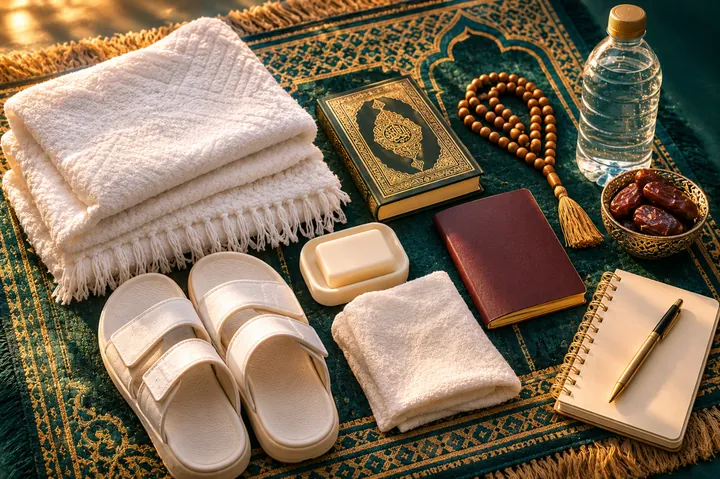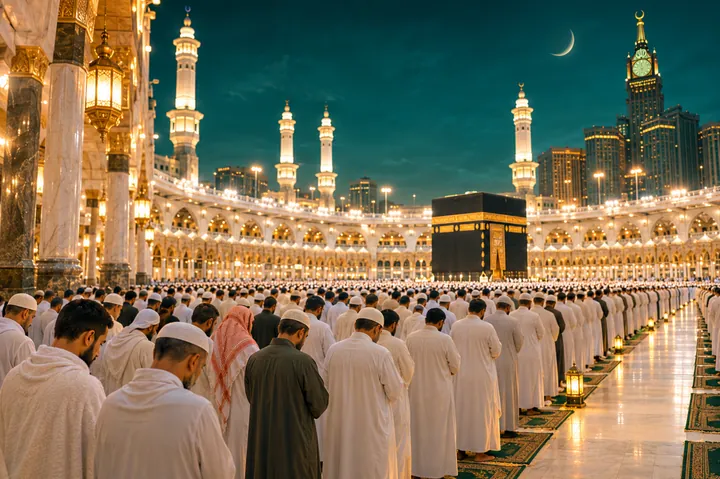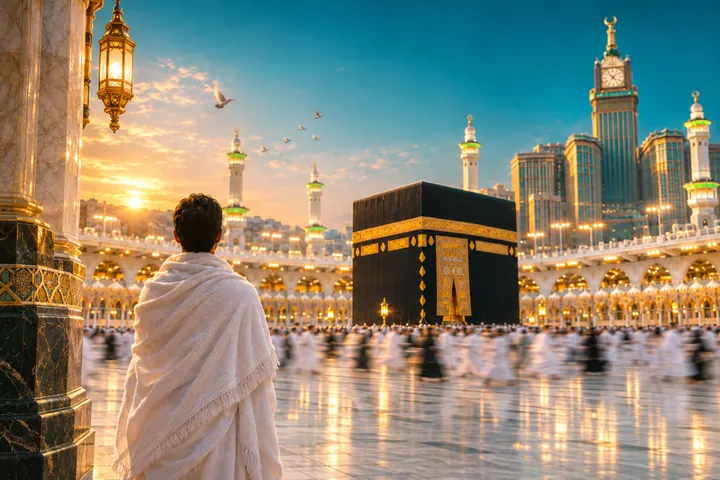
This guide to Umrah for beginners is for anyone who has dreamed of seeing the Kaaba but is not yet sure where to start. Umrah can feel like a world of new words, rules and paperwork, yet at its heart it is a short, beautiful act of worship that millions of first-timers complete every year.
We will walk you through what Umrah is, how the rites fit together, what to arrange before you travel and what the days in Makkah and Madinah actually feel like. Bookmark this Umrah for beginners overview and return to it as your plans take shape.
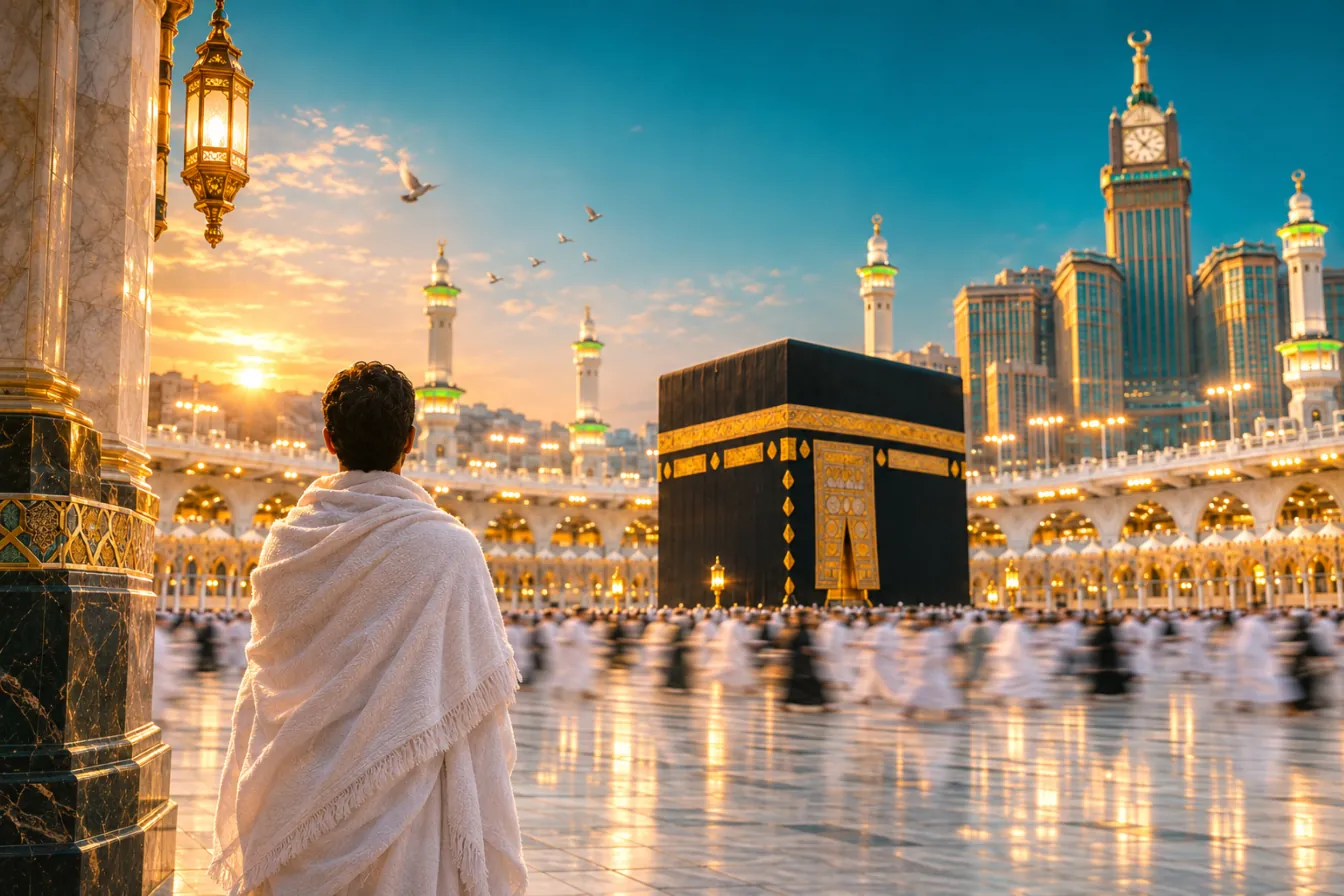
Umrah for beginners: what is Umrah?
Every lesson in Umrah for beginners starts here: Umrah is often called the “lesser pilgrimage”. It is a visit to the Sacred House in Makkah, performed in a state of ihram, made up of tawaf around the Kaaba, sa‘i between the hills of Safa and Marwah, and shaving or trimming the hair. Unlike Hajj, it has no fixed dates and can be performed at almost any time of the year.
Allah mentions it alongside Hajj in the Qur’an: “And complete the Hajj and Umrah for Allah” (al-Baqarah 2:196). The Prophet ﷺ also said that one Umrah to the next is an expiation for what lies between them, as reported by al-Bukhari and Muslim. For many people, that promise of a fresh start is the very reason they begin researching Umrah for beginners in the first place.
Is Umrah obligatory?
Scholars differ here. In the Shafi‘i and Hanbali schools, Umrah is obligatory once in a lifetime for those who are able, much like Hajj. In the Hanafi and Maliki schools, it is a strongly emphasised Sunnah rather than an obligation. Either way, it is a deeply rewarding act of worship, and the steps are the same whichever view you follow.
The rites of Umrah at a glance
The best news in any guide to Umrah for beginners is that the rites themselves are short. Most pilgrims complete them in around two to four hours, depending on crowds and pace. Here is the whole journey in five steps.
Ihram is the sacred state you enter at or before the Miqat, the boundary point on your route to Makkah. You make the intention for Umrah and begin reciting the Talbiyah. Tawaf means walking seven anticlockwise rounds around the Kaaba, starting and ending at the Black Stone. After tawaf you pray two rak‘ahs, ideally behind Maqam Ibrahim if there is space, and drink Zamzam.
Sa‘i is walking seven laps between Safa and Marwah, recalling the search of Hajar for water for her son Isma‘il. Finally, men shave the head or shorten the hair evenly, and women trim about a fingertip’s length. With that, Umrah is complete and the restrictions of ihram are lifted. When you are ready to go beyond Umrah for beginners, our full guide to how to perform Umrah covers every step with its duas.
Step-by-step guideHow to perform Umrah, with every duaIhram, tawaf, sa‘i and halq explained in order, with Arabic, transliteration and meaning.Read the guide →Umrah for beginners: your planning timeline
The practical side is where most first-timers feel lost, so this part of our Umrah for beginners guide sets out a simple order of tasks. You do not need to do everything at once; work through it over a few months.
Three to six months before: choose your season
Decide when to go. School holidays, Ramadan and the winter months are popular, while some quieter periods offer more space at the Haram. Our guide to the best time for Umrah compares each month.
Three to four months before: decide how long
Most beginners choose between seven and fourteen nights, split between Makkah and Madinah. Agree the split with everyone travelling and check annual leave or school dates.
Two to three months before: book flights and hotels
Choose hotels by walking distance to the Haram, especially if you travel with children or older parents. Decide whether to book a package or arrange things yourself.
Six to eight weeks before: visa, insurance and health
Apply for your visa, buy travel insurance with medical cover, and speak to your GP or travel clinic about vaccinations and any regular medicines.
Four weeks before: learn the rites and duas
Read the steps of Umrah until you can explain them from memory. Learn the Talbiyah and a few short duas, and practise wrapping ihram if you are a man.
The final week: pack and prepare your heart
Pack light, download your documents, settle what you can, ask forgiveness from family and friends, and write down the duas people have asked you to make.
If you are not sure how many nights suit you, our article on how many days you need for Umrah includes sample seven, ten and fourteen-night plans. Seasons matter too: compare crowds and weather in our best time for Umrah guide before you commit to dates.
Try the trip planner
Pick your nights in Makkah and Madinah, choose which city comes first and see a day-by-day outline in seconds. It is the quickest way to turn the ideas in this Umrah for beginners overview into a real plan. You can also open the full Umrah trip planner on its own page.
Umrah trip planner
Choose your nights and order of cities to get a day-by-day outline.
Visas and the Nusuk app
Paperwork is the part of Umrah for beginners that changes most often, so treat this section as a map rather than a rulebook. The right route depends on your nationality and where you live, and requirements are updated from time to time.
A dedicated Umrah visa is usually arranged through an authorised Umrah provider or travel agent, often as part of a package that includes hotels and transport. It is the traditional route and suits pilgrims who want everything arranged in one place.
Citizens of many countries, and some residents of certain countries, can apply online for a Saudi tourist eVisa, which has also allowed Umrah outside the Hajj season. Eligibility lists change, so check the official Visit Saudi visa portal before you book anything.
Residents of the Kingdom do not need a visa, but they still need an Umrah permit. Permits are booked through the Nusuk app, and time slots can fill quickly in busy seasons such as Ramadan.
Whichever visa you hold, Umrah for beginners today means getting to know Nusuk, the official Saudi platform for pilgrims. It is used to book or confirm your Umrah permit and, in Madinah, to request a visit to the Rawdah. Download it well before you travel, create your account and keep your passport details to hand. For the latest rules on permits, visas and vaccinations, check the official Nusuk website and your provider.
Umrah for beginners: ihram and the Miqat
In any class on Umrah for beginners, ihram causes more worry than anything else, yet the essentials are simple. Before you reach the Miqat, take a bath, trim your nails and remove unwanted hair. Men may apply perfume to the body, though not to the ihram cloth, before making the intention.
Men wear two unstitched white sheets, one around the waist and one over the shoulders, with sandals that leave the ankle bone uncovered. Women wear their normal modest clothing in any colour, without a niqab or gloves. Then, at or before the Miqat, you make the intention for Umrah and begin the Talbiyah.
لَبَّيْكَ اللَّهُمَّ لَبَّيْكَ، لَبَّيْكَ لَا شَرِيكَ لَكَ لَبَّيْكَ، إِنَّ الْحَمْدَ وَالنِّعْمَةَ لَكَ وَالْمُلْكَ، لَا شَرِيكَ لَكَ
Labbayk Allahumma labbayk, labbayka la sharika laka labbayk, inna-l-hamda wa-n-ni‘mata laka wa-l-mulk, la sharika lak.
Here I am, O Allah, here I am. Here I am, You have no partner, here I am. All praise, blessings and sovereignty belong to You. You have no partner.
Source: al-Bukhari and MuslimIf you fly directly to Jeddah, your flight will cross the Miqat before landing, so you need to be in ihram on the plane. A common tip in Umrah for beginners classes is to change at home or at the departure airport and make the intention when the crew announces the Miqat. If you fly to Madinah first, you will enter ihram later at Dhul Hulayfah on the way to Makkah. The Miqat guide explains each boundary.
The main rules of ihram
Once in ihram, avoid perfume and scented products, cutting hair or nails, hunting, marriage contracts and marital relations. Men must not cover the head or wear stitched, fitted clothing. Our ihram rules guide lists the details, including what to do if you make a mistake.
Your first day in Makkah
When you first see the Kaaba, take a moment. Many pilgrims make a heartfelt dua at that first sight. Then, when you are ready and have wudu, begin tawaf at the Black Stone with the Kaaba on your left.
If you arrive late at night and exhausted, it is perfectly acceptable to rest at your hotel before performing Umrah while remaining in ihram. Worship with a clear head is better than rushing in a daze. This is one of the most freeing pieces of advice we can give on Umrah for beginners: there is no stopwatch.
بِسْمِ اللهِ، وَالصَّلَاةُ وَالسَّلَامُ عَلَى رَسُولِ اللهِ، اللَّهُمَّ افْتَحْ لِي أَبْوَابَ رَحْمَتِكَ
Bismillah, wa-s-salatu wa-s-salamu ‘ala rasulillah. Allahumma-ftah li abwaba rahmatik.
In the name of Allah, and peace and blessings be upon the Messenger of Allah. O Allah, open for me the doors of Your mercy.
Source: Muslim; Ibn MajahPractical tips for the Haram
- Pick a meeting gate. Masjid al-Haram has many numbered gates. Agree one with your group and photograph its number.
- Use a counter. Losing count is the most common worry in Umrah for beginners. A simple tool such as our tawaf and sa‘i counter helps, and if you are unsure, build on the lower number.
- Do not push for the Black Stone. Touching or kissing it is Sunnah, but harming others is not allowed. Pointing towards it is enough.
- Try the upper floors. Rounds are longer but often less crowded, which suits families and older pilgrims.
Visiting Madinah
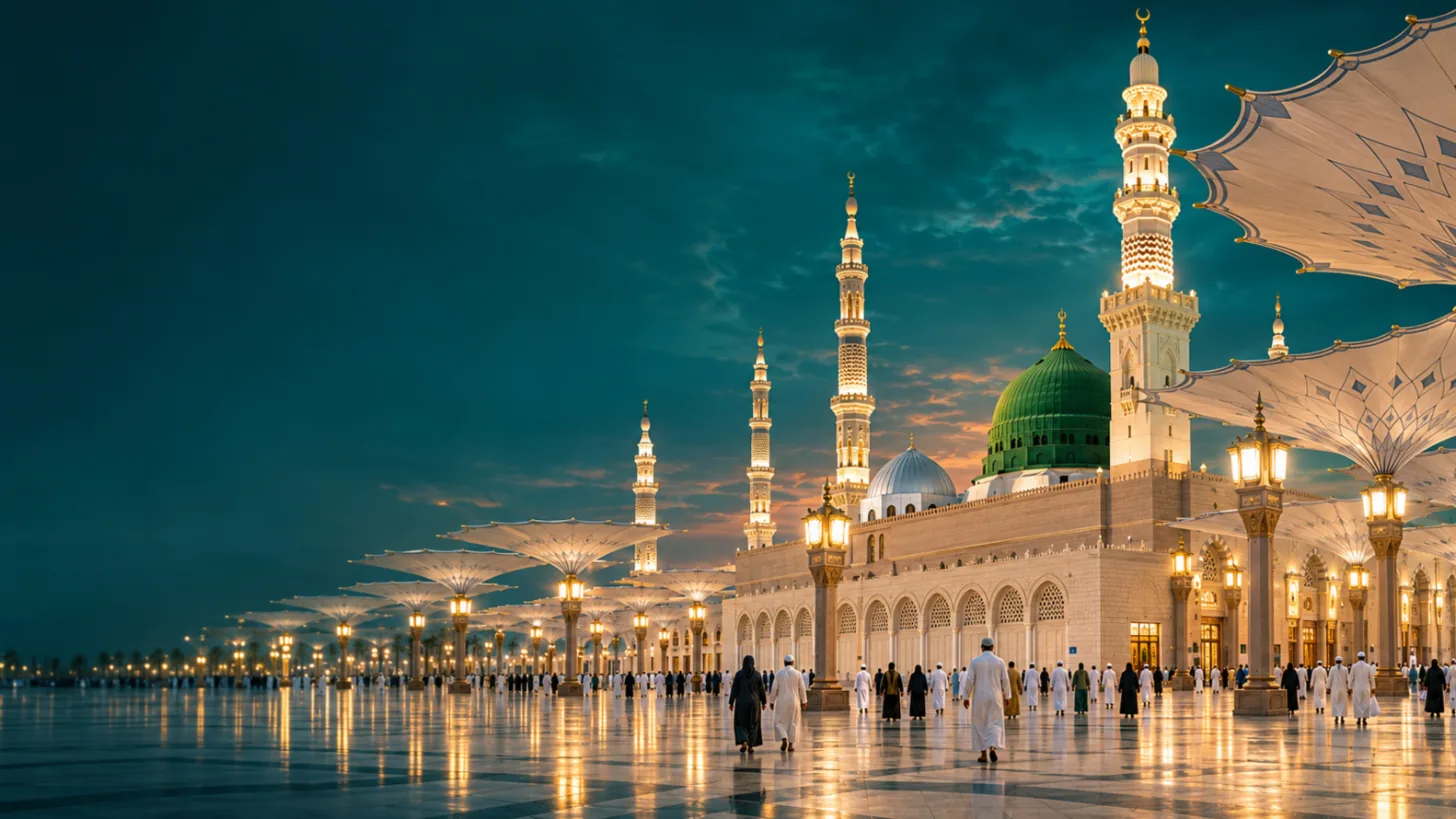
Visiting Madinah is not part of the rites of Umrah, but almost every plan for Umrah for beginners includes it, and for good reason. Praying in Masjid an-Nabawi, sending salam on the Prophet ﷺ and walking the streets he walked is often the emotional high point of the trip.
The Haramain high-speed train links Makkah and Madinah, and many itineraries begin or end in Madinah. Remember that the Rawdah usually requires a booked slot in Nusuk. Beyond the Prophet’s Mosque, visiting Masjid Quba is a Sunnah, while other places such as Mount Uhud and the Baqi‘ cemetery are commonly visited for their history. See our Madinah ziyarat guide for more.
السَّلَامُ عَلَيْكَ يَا رَسُولَ اللهِ
As-salamu ‘alayka ya Rasulallah.
Peace be upon you, O Messenger of Allah.
Source: The practice of Ibn ‘Umar (Malik’s Muwatta’; al-Bayhaqi)Umrah for beginners: package or independent?
One of the biggest decisions in Umrah for beginners is whether to book a package or arrange each part yourself. Both are valid. The table below compares the two approaches honestly.
| Consideration | Umrah package | Independent trip |
|---|---|---|
| Visa and permits | Usually arranged for you | You apply and book yourself |
| Hotels | Chosen with you, often near the Haram | Full freedom, more research needed |
| Transfers and train | Usually included | Booked separately on arrival or online |
| Guidance on the rites | Often a group guide or scholar | You rely on your own study |
| Flexibility | Set itinerary, some changes possible | Change plans as you go |
| Support if things go wrong | A team to call | You solve problems yourself |
| Best for | First-timers, families, older parents | Confident, experienced travellers |
When it comes to Umrah for beginners, many first-timers choose a package simply for peace of mind, and then travel independently on later trips once they know the cities. You can browse our Umrah packages by style and season, or learn more about our team and how we work with pilgrims. When you are ready, share your dates through our quote form for a tailored proposal.
Family Umrah
Connecting rooms, short walks and a gentle pace planned around children.
Learn moreUmrah for women
Rulings on ihram, menstruation and travel, explained clearly for sisters.
Learn moreUmrah checklist
Tick off documents, clothing and essentials as you pack.
Learn moreBeginner mistakes to avoid
Almost every mistake in Umrah for beginners comes from rushing or copying the crowd without knowledge. Keep this short list in mind and your Umrah will be calmer and more correct.
- Crossing the Miqat without ihram. Make the intention at or before it, including on a plane.
- Keeping the right shoulder uncovered all the time. Men uncover it only during the tawaf of Umrah.
- Walking inside Hijr Isma‘il. The curved low wall marks part of the Kaaba, so go around the outside of it.
- Believing each round needs a special dua. There is no fixed dua for each round in the Sunnah; speak to Allah sincerely in your own language.
- Cutting only a few strands of hair. Men should shave or shorten from the whole head; scholars differ on the minimum, so be thorough.
- Using scented soap in ihram. Pack unscented toiletries and wipes before you leave.
Above all, remember that sincerity matters more than perfection. Allah knows the effort it took to reach His House. If something goes wrong, ask a qualified scholar or the guidance desks at the Haram rather than relying on guesswork from strangers. Every guide to Umrah for beginners should end with this reminder: you are a guest of Allah, so be gentle with yourself and with others.
Umrah for beginners: frequently asked questions
How long does Umrah take to perform?
The rites themselves usually take around two to four hours, depending on crowds, your pace and whether you use the upper floors. Most trips last one to two weeks to include rest and a visit to Madinah.
Can I perform Umrah at any time of year?
Umrah can be performed at almost any time. Some scholars consider it disliked during the days of Hajj, and Saudi authorities usually pause Umrah permits for the Hajj season, so check the latest dates on Nusuk.
Do I need to speak Arabic to perform Umrah?
No. It is good to learn the Talbiyah and a few short duas in Arabic, but you may make your personal duas in any language. Signs at the Haram are in Arabic and English.
Is it better to go to Makkah or Madinah first?
Both work. Makkah first lets you complete Umrah early while you are fresh. Madinah first gives you time to settle before entering ihram at Dhul Hulayfah on the way to Makkah.
Can women perform Umrah without a mahram?
Saudi regulations now allow women to travel for Umrah without a mahram in many cases, but scholars differ on the religious ruling. Ask a scholar you trust and check the current entry rules.
What if I make a mistake during Umrah?
Do not panic. Some mistakes require an expiation and others do not, and scholars differ on several details. Ask a qualified scholar or the guidance desks in the Haram as soon as you can.
Can children perform Umrah?
Yes. A child’s Umrah is valid and rewarded, although it does not replace an obligatory Umrah later in life according to those who hold it obligatory. Parents can make the intention on behalf of very young children.
Ready to plan your first Umrah?
Tell us your dates, departure city and who is travelling, and our team will send a calm, well-paced proposal built for first-timers.