Walking between Safa and Marwah, known as sa‘i, is one of the most moving moments of Umrah. After the intensity of tawaf, you follow in the footsteps of Hajar, the mother of Isma‘il, retracing a search for water that ended in the gift of Zamzam. This guide explains what sa‘i is, why it matters and exactly how to perform it.
Whether this is your first Umrah or you simply want to perform the rite with more understanding, read it once at home and again before you fly. Every section is written to be practical, calm and faithful to the Sunnah.
Sa‘i is the fourth of the five steps of Umrah. It comes after tawaf and its two rak‘ahs, and before cutting the hair. Here is where it sits in the whole journey.
What is sa‘i between Safa and Marwah?
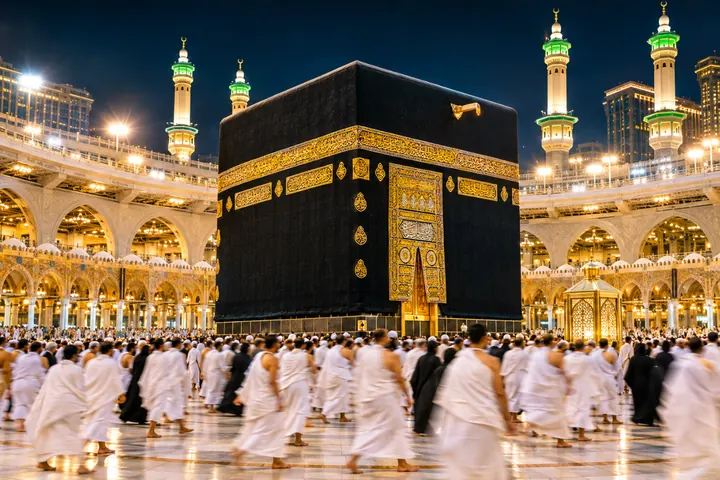
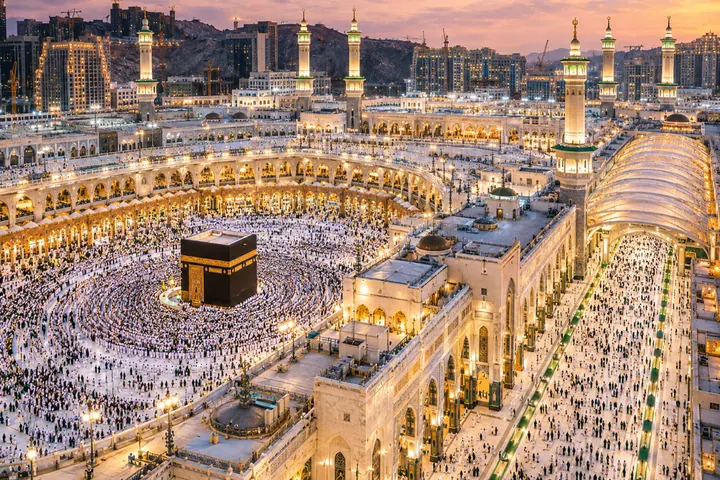
The word sa‘i means striving or making an effort. In the rites of Umrah and Hajj it refers to walking seven times between two small hills, Safa and Marwah, which today sit inside the extended Masjid al-Haram. Safa lies close to the Kaaba, and Marwah lies roughly 450 metres to the north-east.
Allah mentions the two hills directly in the Qur’an: “Indeed, Safa and Marwah are among the symbols of Allah. So whoever performs Hajj to the House or Umrah, there is no blame upon him for walking between them” (al-Baqarah 2:158). The phrase “no blame” was revealed because some early Muslims hesitated, since idols had once stood on the hills before Islam. The verse confirmed that walking between Safa and Marwah is an act of worship belonging to the religion of Ibrahim.
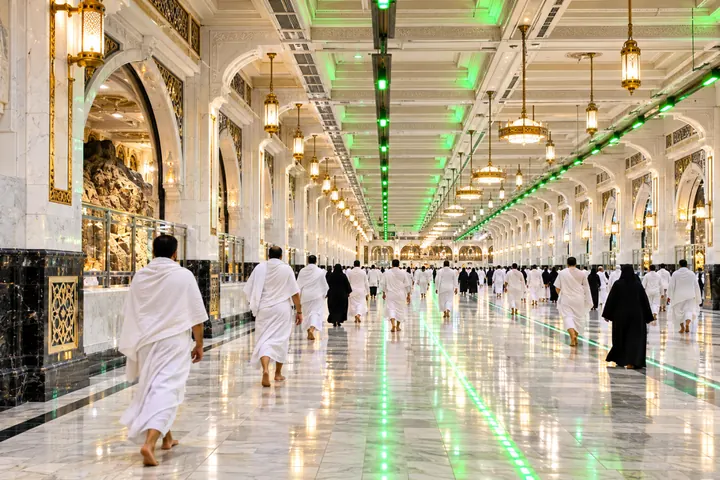
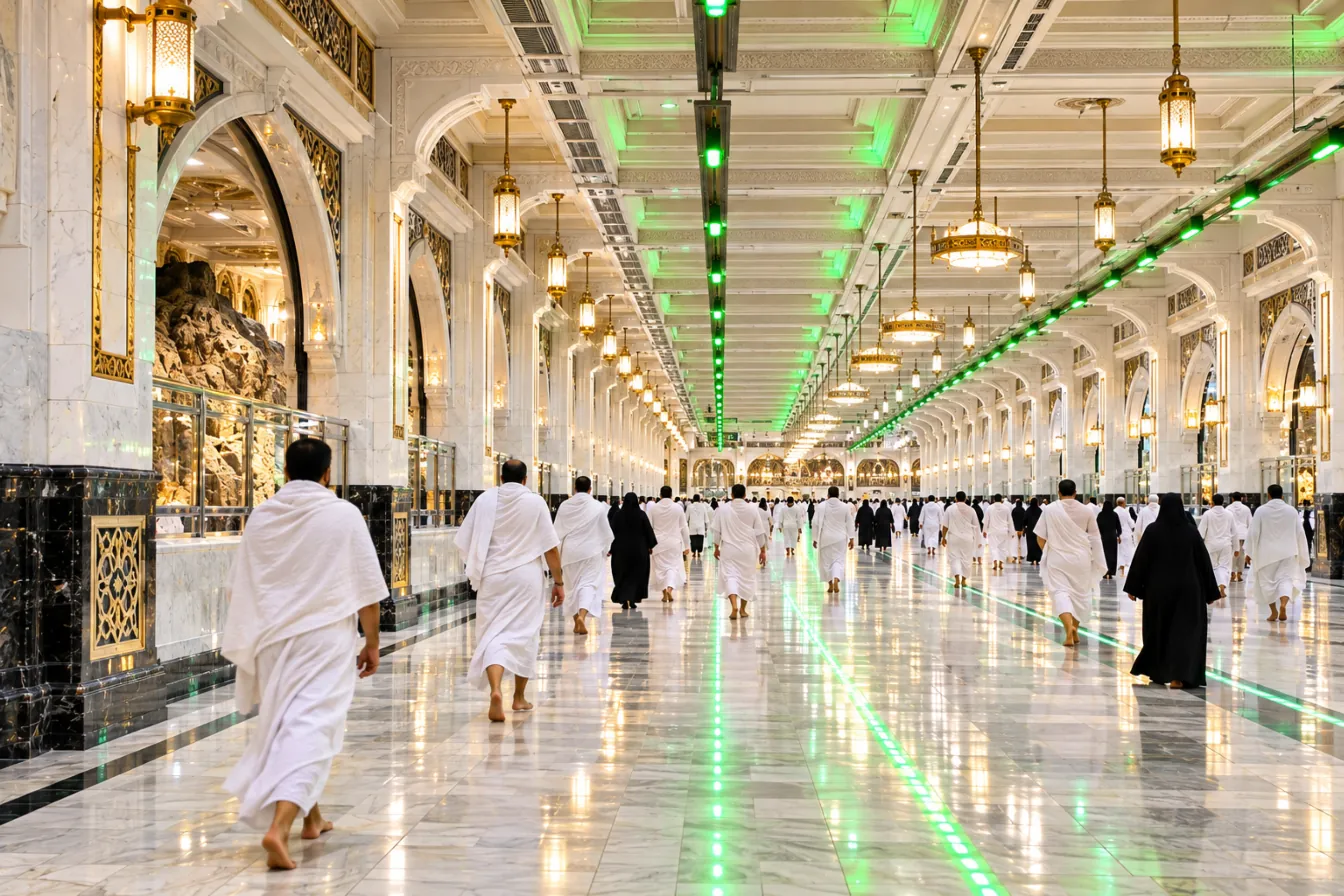
Today the hills are enclosed in a long, air-conditioned gallery called the mas‘a. Small sections of the original rock are still visible at both ends behind glass and low barriers. The floor is smooth marble, and there are separate levels and lanes to help the flow of pilgrims.
The story of Hajar between Safa and Marwah
The origin of sa‘i is narrated in a long report in Sahih al-Bukhari from Ibn ‘Abbas. Ibrahim, peace be upon him, left his wife Hajar and their infant son Isma‘il in the barren valley of Makkah by the command of Allah. When their water ran out and the baby began to cry with thirst, Hajar climbed Safa to look for help, then hurried across the valley floor and climbed Marwah. She did this seven times.
At the end of her search, the angel Jibril struck the ground and the spring of Zamzam burst forth. In the same report the Prophet ﷺ said that this is why people walk between Safa and Marwah. Every pilgrim who walks the mas‘a is honouring a mother’s trust in Allah, her effort and the relief that followed.
Before you walk between Safa and Marwah
Sa‘i for Umrah follows directly after your tawaf and the two rak‘ahs behind Maqam Ibrahim, or anywhere in the masjid if that area is crowded. If you have not yet read it, our full guide on how to perform Umrah covers tawaf in detail. It is Sunnah to drink Zamzam after the two rak‘ahs and, if possible, to touch the Black Stone once more before heading to Safa.
- Cover your right shoulder. Men uncover the right shoulder (idtiba) only during the tawaf of Umrah. Before sa‘i, put the ihram cloth back over both shoulders.
- Remain in ihram. You are still in the state of ihram during sa‘i. The prohibitions continue until you shave or trim your hair.
- Check your footwear plan. Many pilgrims walk barefoot on the cool marble; others wear clean socks or soft sandals. Keep a small shoe bag with you.
- Prepare a counter. Seven laps are easy to lose track of when you are tired. Our tawaf and sa‘i counter is designed for exactly this moment.
Follow the signs for “Mas‘a” or “Safa” from the tawaf area. On busy days the stewards may direct you to a particular floor; any level of the mas‘a is valid for sa‘i, as scholars and the Saudi authorities have confirmed that the upper floors lie within the boundaries of the hills.
Free toolTawaf and Sa‘i lap counterA big-button counter for your phone so you never lose count of your rounds.Open counter →How to perform sa‘i between Safa and Marwah, step by step
The description below follows the well-known hadith of Jabir in Sahih Muslim, which records the Prophet’s ﷺ farewell pilgrimage in detail. It is the clearest source we have for the Sunnah of sa‘i.
Approach Safa and recite the verse
As you draw near Safa, recite the verse: “Inna as-Safa wal-Marwata min sha‘a’irillah…” The Prophet ﷺ recited it and said, “I begin with what Allah began with.” This recitation is made only once, at the start of the first lap.
Climb Safa and face the Kaaba
Climb the slope of Safa until you can see the Kaaba, or face its direction if you cannot. Raise your hands as you would in dua, not as in the takbir of prayer.
Praise Allah and make dua
Say the words of tawhid and takbir reported from the Prophet ﷺ, then make your own duas. He repeated the dhikr three times, making dua between each repetition.
Walk towards Marwah
Descend and walk towards Marwah at a normal pace. Between the two green lights, men walk briskly or jog lightly; women walk normally throughout.
Repeat at Marwah
Climb Marwah, face the Kaaba and repeat the same dhikr and dua as at Safa. You have now completed one lap.
Complete seven laps
Walk back to Safa for lap two, and continue until you finish your seventh lap at Marwah. Then proceed to shave or trim your hair.
How the laps between Safa and Marwah are counted
This is the point that confuses more pilgrims than any other. Going from Safa to Marwah counts as one lap. Coming back from Marwah to Safa counts as a second lap. So you finish at Marwah, not at Safa.
| Lap | From | To |
|---|---|---|
| 1 | Safa | Marwah |
| 2 | Marwah | Safa |
| 3 | Safa | Marwah |
| 4 | Marwah | Safa |
| 5 | Safa | Marwah |
| 6 | Marwah | Safa |
| 7 | Safa | Marwah (finish) |
A simple memory aid: odd-numbered laps always end at Marwah, and even-numbered laps always end at Safa. If you are at Marwah and believe you have finished, check that your count is odd.
Tawaf and Sa‘i counter
Tap once at the end of each round. Your count is saved if the screen locks.
Tawaf rounds start and end at the Black Stone (green light on the wall opposite).
Duas and dhikr at Safa and Marwah
There is no fixed dua for each lap of sa‘i established in the Sunnah. You may praise Allah, recite Qur’an and ask for anything good in any language. What is reported is the recitation of the verse at the start and the dhikr on each hill. Our full Umrah duas guide collects these with Arabic, transliteration and meaning.
إِنَّ الصَّفَا وَالْمَرْوَةَ مِنْ شَعَائِرِ اللهِ — أَبْدَأُ بِمَا بَدَأَ اللهُ بِهِ
Inna-s-Safa wa-l-Marwata min sha‘a’iri-llah. Abda’u bima bada’a-llahu bih.
Indeed Safa and Marwah are among the symbols of Allah. I begin with what Allah began with.
Source: Qur’an 2:158; Muslim (hadith of Jabir)On the hill, after facing the Kaaba, the Prophet ﷺ declared the oneness of Allah and His greatness, then said the words in the card below, repeating them three times with personal dua in between, as narrated by Jabir in Sahih Muslim.
اللهُ أَكْبَرُ، اللهُ أَكْبَرُ، اللهُ أَكْبَرُ. لَا إِلَهَ إِلَّا اللهُ وَحْدَهُ لَا شَرِيكَ لَهُ، لَهُ الْمُلْكُ وَلَهُ الْحَمْدُ، وَهُوَ عَلَى كُلِّ شَيْءٍ قَدِيرٌ. لَا إِلَهَ إِلَّا اللهُ وَحْدَهُ، أَنْجَزَ وَعْدَهُ، وَنَصَرَ عَبْدَهُ، وَهَزَمَ الْأَحْزَابَ وَحْدَهُ
Allahu akbar, Allahu akbar, Allahu akbar. La ilaha illa-llahu wahdahu la sharika lah, lahu-l-mulku wa lahu-l-hamd, wa huwa ‘ala kulli shay’in qadir. La ilaha illa-llahu wahdah, anjaza wa‘dah, wa nasara ‘abdah, wa hazama-l-ahzaba wahdah.
Allah is the Greatest (three times). There is no god but Allah alone, without partner; His is the dominion and His is the praise, and He has power over all things. There is no god but Allah alone; He fulfilled His promise, gave victory to His servant and defeated the confederates alone.
Source: Muslim (hadith of Jabir)Between the green lights, some Companions, including Ibn Mas‘ud and Ibn ‘Umar, are reported to have said a short dua asking for forgiveness and mercy. It is not a fixed requirement, but many pilgrims like to use it.
رَبِّ اغْفِرْ وَارْحَمْ، إِنَّكَ أَنْتَ الْأَعَزُّ الْأَكْرَمُ
Rabbi-ghfir warham, innaka anta-l-a‘azzu-l-akram.
My Lord, forgive and have mercy; You are the Most Mighty, the Most Generous.
Source: Reported from Ibn Mas‘ud and Ibn ‘Umar (Ibn Abi Shaybah)Rulings for sa‘i between Safa and Marwah
Most pilgrims do not need to know every legal detail, but a few rulings come up again and again. Where scholars differ, we say so; for anything specific to your situation, ask a qualified scholar.
According to the Maliki, Shafi‘i and Hanbali schools, sa‘i is a pillar (rukn) of Umrah and Hajj: without it, the Umrah is not complete. In the Hanafi school it is an obligation (wajib), and missing it without excuse requires a sacrifice. Either way, every pilgrim should treat sa‘i as essential.
The majority of scholars do not require wudu for sa‘i, although it is recommended. If your wudu breaks while walking between Safa and Marwah, you may continue. This is different from tawaf, where most scholars require wudu.
Sa‘i of Umrah must come after a valid tawaf. It must start at Safa and end at Marwah. A lap that starts at Marwah by mistake is not counted, so begin your count again from Safa.
Continuity between the laps is recommended. A short break to pray a congregational prayer, rest, drink or renew wudu does not break your sa‘i. Scholars differ about very long interruptions, so try to complete the seven laps in one session.
Women and sa‘i
Women perform the same seven laps but do not jog between the green lights; they walk at a normal pace for the whole distance. They also do not need to climb high on the hills, as standing near the end of the slope is enough.
Many scholars hold that a woman whose period begins after she has finished tawaf may still complete sa‘i, because purity is not a condition for walking between Safa and Marwah. Tawaf itself must wait until she is pure. Our Umrah for women guide covers these rulings in more depth.
Practical tips for walking between Safa and Marwah
Seven laps cover around three kilometres, often after a long journey and a full tawaf. These tips help you stay comfortable and focused.
Choose your floor
The ground floor is closest to the original hills and feels most traditional. Upper floors and the roof are often less crowded at peak times.
Pace yourself
Sa‘i usually takes around 45 to 90 minutes, depending on crowds and pace. Sit and rest on the side whenever you need to, then continue.
Drink Zamzam
Zamzam coolers line the mas‘a. Sip regularly, especially in the warmer months, and take a moment to remember where the water came from.
Wheelchair lanes
There are dedicated lanes for wheelchairs. Electric carts are sometimes available; ask at the official desks, as arrangements change.
Agree a meeting point
Pick a fixed spot, such as the top of Marwah on your floor, where your group will gather if anyone gets separated.
Use a counter
A digital or ring counter removes the most common worry. Click once each time you reach a hill.

Elderly pilgrims and those with limited mobility
If walking between Safa and Marwah seven times is too much for you or a parent, using a wheelchair is entirely permissible. A family member may push the wheelchair, or official helpers may be booked inside the masjid. Check the latest services on the official Nusuk platform and at the Haram help desks before you travel.
For pilgrims travelling with older relatives, our guide to Umrah with elderly parents explains how to plan rest, hotel location and assistance so that the whole family can complete the rites together.
Ending sa‘i and leaving ihram
Once you finish the seventh lap at Marwah, sa‘i is complete. There is no special prayer to pray at the end. Men then shave the head or shorten the hair, and women trim a fingertip’s length from their hair. Our guide to halq and taqsir explains how to do this correctly so that you leave ihram properly.
Common mistakes at Safa and Marwah
Most mistakes during sa‘i come from tiredness or from copying others without knowledge. Here are the ones we see most often.
| Common mistake | What to do instead |
|---|---|
| Counting a round trip (Safa to Marwah and back) as one lap | Each one-way walk between Safa and Marwah is one lap; finish at Marwah after seven. |
| Starting the first lap from Marwah | Always begin at Safa; a lap begun at Marwah is not counted. |
| Keeping the right shoulder uncovered | Idtiba is only for tawaf; cover both shoulders for sa‘i. |
| Reciting the Safa verse at the start of every lap | Recite it once, as you approach Safa for the first time. |
| Raising hands as in the takbir of prayer on the hills | Raise your hands as in dua while facing the Kaaba. |
| Women jogging between the green lights | Only men walk briskly there; women walk at a normal pace. |
| Leaving ihram after sa‘i without cutting the hair | Shave or trim first; only then is your Umrah complete. |
If you realise you made a mistake, do not panic. Many errors can be corrected on the spot, and others have clear rulings. Ask a qualified scholar or the Haram guidance desks, and read our full guide on how to perform Umrah to see how sa‘i fits with every other step.
Bringing your heart to Safa and Marwah
It is easy to treat sa‘i as a long walk to finish before the haircut. Try instead to slow your thoughts. Picture the empty valley, the crying baby and the mother running from hill to hill. Remember that her effort became a rite that millions perform every year, and that the water she was given still refreshes every pilgrim. Walking between Safa and Marwah with that picture in mind transforms the experience. When you are ready to plan your own journey to Safa and Marwah, send your dates through our quote form.
Step-by-step guideHow to perform Umrah, with every duaIhram, tawaf, sa‘i and halq explained in order, with Arabic, transliteration and meaning.Read the guide →Safa and Marwah: frequently asked questions
How many times do you walk between Safa and Marwah?
Seven times. Safa to Marwah is one lap and Marwah to Safa is another, so you begin at Safa and finish your seventh lap at Marwah.
Do I need wudu for sa‘i?
The majority of scholars do not require wudu for sa‘i, although it is recommended. Wudu is required for tawaf according to most scholars.
How long does sa‘i take?
Most pilgrims take between 45 and 90 minutes to walk between Safa and Marwah, depending on crowds, their pace and how long they spend in dua on the hills.
Can I rest or pray during sa‘i?
Yes. You may sit and rest, drink Zamzam or join a congregational prayer, then continue from where you stopped. Try not to make the break very long.
Is sa‘i valid on the upper floors?
Yes. All floors of the mas‘a, including the roof, are used for sa‘i and are within the area between the hills.
Do women jog between the green lights?
No. Only men walk briskly between the green lights. Women walk at a normal pace for the entire distance.
Is there a voluntary sa‘i like voluntary tawaf?
According to most scholars, sa‘i is performed only as part of Umrah or Hajj and is not repeated as a separate voluntary act, unlike tawaf.
Plan an Umrah with time to reflect
Tell us your dates and who is travelling, and our team will plan a well-paced Umrah with a hotel close to the Haram.