
Welcome to the UmraHajj.com Umrah guide library. Whether this is your first journey to Makkah or your tenth, these pages walk you through every rite in order, with the duas to read at each step, the rules of ihram and the practical details that make the days calmer. Each Umrah guide is written in plain English and follows mainstream Sunni practice, noting briefly where the four madhhabs differ.
Umrah is a short act of worship, but it is precise. A little preparation at home means you can spend your time in the Haram focused on Allah rather than on what comes next. Start with the flagship Umrah guide, then use the others as you need them.

All Umrah and Hajj guides
Choose a topic below. Every page has an “On this page” menu, dua cards with Arabic, transliteration and meaning, and a short FAQ.
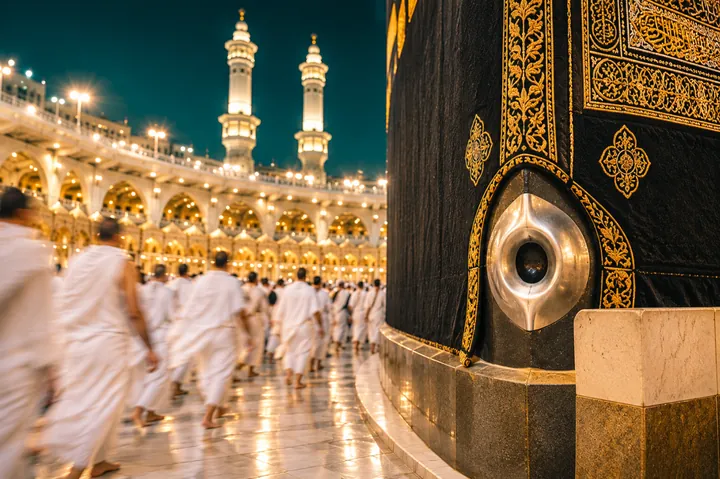
How to Perform Umrah: Step-by-Step Guide with Duas
Learn how to perform Umrah step by step, from ihram at the miqat to tawaf, sa‘i and cutting the hair, with exactly what to read at each stage.
Read more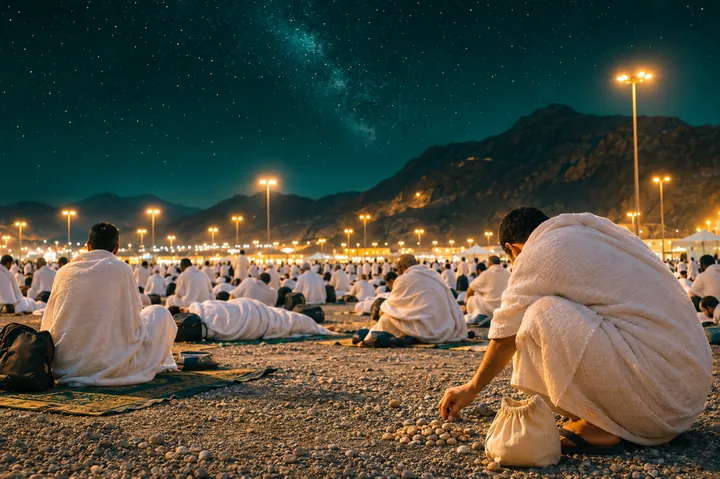
Hajj Step by Step: A Day-by-Day Guide from the 8th to the 13th
Hajj step by step, day by day: the types of Hajj, Mina, Arafah, Muzdalifah, the Jamarat, Tawaf al-Ifadah and the farewell tawaf, with what to read each day.
Read more
Umrah Duas: What to Read at Every Step
The authentic Umrah duas for every stage, from leaving home to Safa and Marwah and Madinah, with Arabic, transliteration, meaning and source.
Read more
Ihram Rules: What Is Allowed and Not Allowed
The ihram rules for men and women explained simply: what is prohibited, what is allowed, and what to do if a rule is broken during Umrah or Hajj.
Read more
Miqat Guide: The Five Miqats and Where to Enter Ihram
Which miqat applies to you? The five miqats set by the Prophet ﷺ, who each is for, and how to enter ihram when flying or staying in Jeddah.
Read more
Madinah Ziyarat: Masjid an-Nabawi, the Rawdah and Historic Sites
A respectful Madinah ziyarat guide: visiting Masjid an-Nabawi, greeting the Prophet ﷺ, booking the Rawdah on Nusuk, and the historic sites of Quba, Uhud and al-Baqi‘.
Read more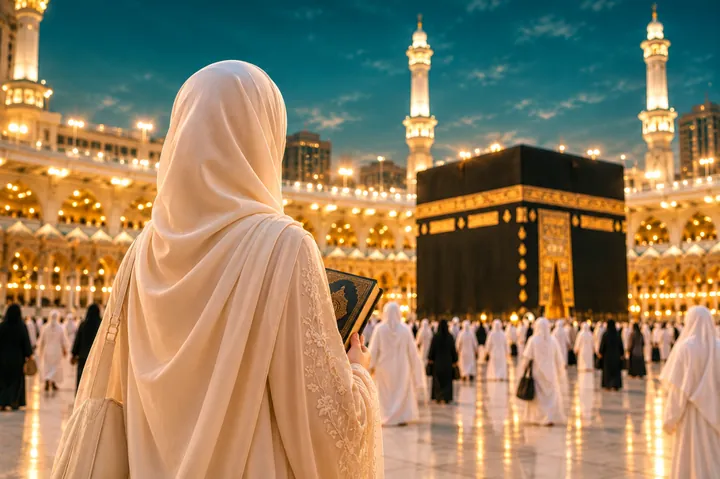
Umrah for Women: Mahram, Ihram, Menstruation and Practical Tips
A clear guide to Umrah for women: current mahram rules and the scholarly views, ihram clothing, menstruation, the rites, hair cutting and Rawdah times.
Read moreUmrah at a glance: the five steps
Umrah has four core acts: entering ihram with the intention at the miqat, tawaf of the Kaaba, sa‘i between Safa and Marwah, and shaving or trimming the hair. Between tawaf and sa‘i you pray two rak‘ahs and drink Zamzam. The infographic below is the shortest possible Umrah guide; our full walkthrough explains each stage and what to read there.
Most pilgrims complete the rites in two to four hours, depending on crowds. The step-by-step how to perform Umrah guide covers every detail, from ghusl at home to the final cut of the hair.
How to use this Umrah guide library
The guides are designed to be read in a sensible order before you travel, then opened on your phone during the rites. Here is a simple plan.
Read the flagship Umrah guide at home
Read the full Umrah guide once or twice in the weeks before you fly. Note the points that are obligatory and those that are sunnah, so you know what matters most if crowds force a change of plan.
Learn the key duas
Memorise the Talbiyah and the intention, and become familiar with the duas at the Black Stone, between the Yemeni Corner and the Black Stone, and on Safa and Marwah. The dua collection groups them by stage.
Check the rules of ihram and your miqat
Know where your miqat is before you board, especially if you are flying, and know what is and is not allowed once you are in ihram.
Plan Madinah
Visiting Masjid an-Nabawi is not part of Umrah, but most pilgrims include it. Book Rawdah permits early in the Nusuk app.
Keep the guides on your phone
Bookmark this Umrah guide hub. During tawaf and sa‘i, the lap counter and dua cards work well with one hand.
Which guide should I read first?
If you are travelling for Umrah, read how to perform Umrah, then the rules of ihram and the miqat guide. Sisters should also read Umrah for women, which covers mahram rules, clothing and menstruation. If you are preparing for Hajj, the Hajj step by step guide explains each day from the 8th to the 13th of Dhul Hijjah.
A note on scholarship
Every Umrah guide on this site follows mainstream Sunni practice drawn from the Qur’an and well-known hadith collections. Where the Hanafi, Maliki, Shafi‘i and Hanbali schools differ on whether something is obligatory or sunnah, we say so briefly. These guides are not a fatwa service: if you face a specific situation, such as breaking a rule of ihram or illness during the rites, ask a qualified scholar you trust.
Preparing your heart as well as your bags
The scholars have long reminded pilgrims that the journey begins before the airport. Settle your debts or make arrangements for them, ask forgiveness from people you may have wronged, and make sincere repentance. Learn the rites so that your worship is correct, and travel with patience, because crowds, heat and delays are part of the experience.
Above all, renew your intention: you are travelling for the sake of Allah alone. Keep a short list of the people who asked you to pray for them, and set aside time each day for Qur’an and quiet dua, not only for the rites themselves.
Free tools to use alongside each Umrah guide
Our free tools turn the guides into something you can use in the moment. They work on any phone and need no sign-up.
Tawaf and sa‘i counter
Big-button lap counter so you never lose count of your seven rounds.
Learn moreMiqat finder
Find the miqat on your route and when to be in ihram.
Learn moreDua finder
Search the duas for each step by stage or keyword.
Learn moreIhram checker
Check whether a common action is allowed in ihram.
Learn moreUmrah checklist
Tick off documents, ihram and health items as you pack.
Learn moreTrip planner
Build a day-by-day outline for Makkah and Madinah.
Learn moreFor official permits, including Umrah and Rawdah appointments, use Saudi Arabia’s Nusuk platform.
Umrah guide FAQ
What is the best Umrah guide for a first-time pilgrim?
Start with our step-by-step how to perform Umrah guide. It explains each rite in order, what to read at each step and the most common mistakes, then links to the detailed guides on ihram, the miqat and duas.
Do the guides follow a particular madhhab?
They follow mainstream Sunni practice and note briefly where the four schools differ on obligations and sunnah acts. For a ruling on your own situation, ask a qualified scholar.
How long does Umrah take?
The rites themselves usually take two to four hours, depending on crowds and your pace. Many pilgrims choose quieter times, such as late at night, for tawaf and sa‘i.
Is visiting Madinah part of Umrah?
No. Umrah is performed in Makkah. Visiting Masjid an-Nabawi in Madinah is a separate, highly recommended act of worship, and most pilgrims include it in the same trip.
Can I use the guides on my phone during Umrah?
Yes. The pages, dua cards and tools are designed for mobile. Save the pages you need before you travel in case your connection is slow inside the Haram.
Ready to plan your Umrah?
Tell us your dates, departure city and hotel preferences, and our team will send a tailored Umrah proposal.