Choosing the right Umrah visa is the first practical decision of any trip to Makkah, and in 2027 pilgrims have more routes into Saudi Arabia than ever before. This guide explains every main option in plain language: who each visa is for, what it allows, what it does not, and how it connects to the Nusuk app that now sits at the centre of every pilgrimage.
Visa rules can change at short notice, especially around Ramadan and the Hajj season. Use this article to understand your choices, then confirm the current details on the official platforms before you book anything that cannot be changed.
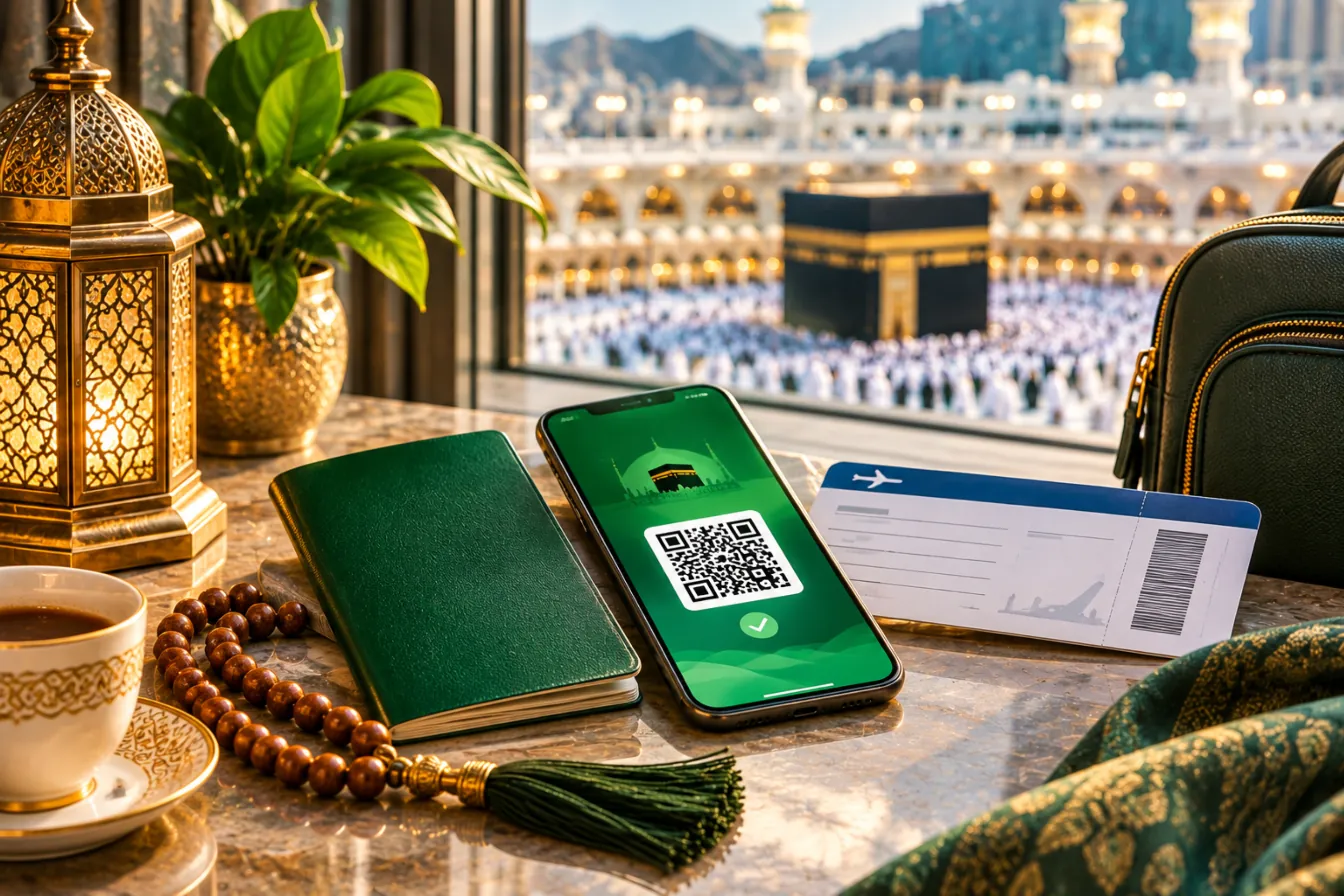
Umrah visa basics: what has changed
For many years, the only way to perform Umrah from abroad was a dedicated pilgrim visa arranged through a licensed agent. That route still exists, but Saudi Arabia has opened several others. Today, most visitors who enter the Kingdom legally on an eligible visa can perform Umrah outside the Hajj season, provided they also hold a valid Umrah permit in the Nusuk app.
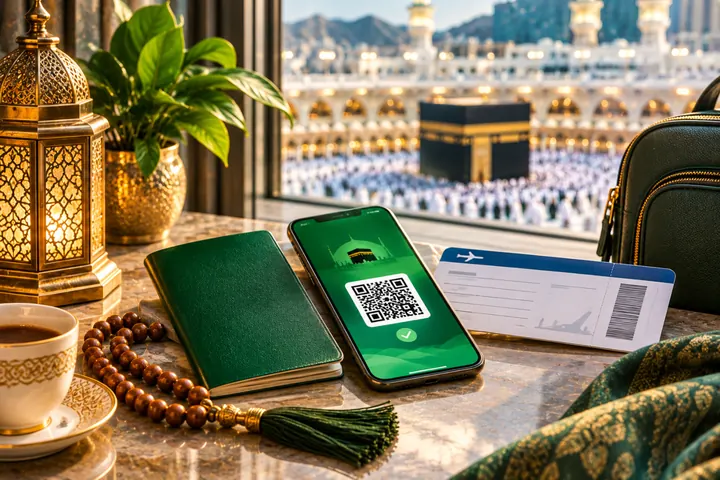
That second point is the one people overlook. Your visa gets you into the country. The Nusuk permit gives you a time slot to perform the rites at Masjid al-Haram. You need both, and you should think of them as two separate steps.
The good news is that the choice is rarely complicated once you know your nationality, your residence and your travel dates. Our help page on Umrah visa options gives a short summary, and the sections below go into each route in depth.
Every Umrah visa option at a glance
The table below compares the routes most pilgrims use. It deliberately leaves out fees and exact durations, because these are updated regularly. Always check the current figures on the official Saudi platforms.
| Visa route | Best for | Umrah allowed? | Key limits |
|---|---|---|---|
| Dedicated Umrah visa | Pilgrims of any nationality, including those not eligible for the tourist eVisa | Yes, its main purpose | Issued via licensed providers or Nusuk; shorter validity; not valid for Hajj |
| Tourist eVisa | Citizens of eligible countries and holders of certain UK, US or Schengen visas | Yes, outside the Hajj season | Cannot be used for Hajj; Makkah access restricted in the Hajj period |
| GCC citizen entry | Citizens of Gulf Cooperation Council states | Yes, with a Nusuk permit | No visa needed; Hajj requires separate registration |
| GCC resident visa | Eligible residents of GCC countries | Yes, outside the Hajj season | Residence permit validity and profession rules can apply |
| Stopover visa | Passengers flying with participating Saudi airlines | Generally yes, within the short stay | Very short validity; tied to your onward ticket |
| Family or personal visit visa | Relatives or guests of Saudi residents and citizens | Generally yes | Requires an invitation; purpose is the family visit |
| Saudi residence (iqama) | Expatriates living in the Kingdom | Yes, with a Nusuk permit | Book a slot in Nusuk; residents’ Hajj has its own process |
The dedicated Umrah visa
The dedicated Umrah visa is designed specifically for pilgrims. Historically it was only available through an authorised Saudi Umrah company working with an agent in your home country. Today you can also arrange it through the Nusuk Umrah platform, where licensed providers offer packages that bundle the visa, accommodation and transport.
Who the Umrah visa suits best
This route is ideal if your passport is not eligible for the tourist eVisa, which is the case for many pilgrims from South Asia, Africa and parts of the Middle East. It also suits families and groups who prefer one provider to handle everything. A licensed agent arranges the visa together with hotels and transfers, so the paperwork is joined up from the start.
What the Umrah visa allows
An Umrah visa allows you to perform Umrah, visit Madinah and travel within the Kingdom for the duration of its validity. It usually includes mandatory health insurance. Its validity is generally shorter than a tourist visa and it is single-purpose, so it does not suit long business or leisure trips. Check the current permitted length of stay when you apply, as it has been adjusted several times.
Tailored quoteTell us your dates, city and hotel preferencesOne short form, a personalised Umrah or Hajj proposal from our travel team — no obligation.Request my quote →The tourist eVisa for Umrah
Since 2019, Saudi Arabia has offered a tourist eVisa, and holders are permitted to perform Umrah outside the Hajj season. For eligible nationalities, this is often the simplest and most flexible option. You apply online through the official Visit Saudi visa portal, and some nationalities may also obtain a visa on arrival at major airports.
Eligibility has widened over time. It covers citizens of many countries, including the UK, the USA, Canada, Australia, Malaysia and much of Europe. Some non-eligible nationals who hold a valid UK, US or Schengen visa, or residence in those places, may also qualify. Because the lists change, check your own passport against the official portal rather than relying on older articles.
We have written a full guide to the Saudi tourist eVisa for Umrah, covering eligibility, the application process and the rules for Hajj season in more detail.
The tourist eVisa is usually multiple-entry and longer in validity than the dedicated pilgrim visa. You can book your own flights and hotels, combine Umrah with travel elsewhere in the Kingdom and return for a second Umrah later in the year if your visa remains valid.
It cannot be used for Hajj, and in the Hajj period it may not allow entry to Makkah. It is only available to eligible passports. You are also responsible for organising everything yourself, including your Nusuk permit.
Independent travellers with eligible passports, pilgrims who want flexibility, and those combining Umrah with visits to family or other cities. Families who prefer a managed trip may still choose a package with an Umrah visa.
Umrah visa routes for GCC citizens and residents
Citizens of the Gulf Cooperation Council states (the UAE, Kuwait, Qatar, Bahrain, Oman) can enter Saudi Arabia with their national ID or passport and do not need an Umrah visa. They simply book an Umrah permit in Nusuk before entering Makkah.
Residents of GCC countries may be eligible for a dedicated GCC resident visa or the tourist eVisa, depending on current rules. Conditions have included minimum residence permit validity and, at times, restrictions linked to profession, though these have been relaxed. If you live in the UAE, our page on Umrah from the UAE explains the usual road and air routes.
Expatriates living inside Saudi Arabia need no visa at all. They book their permit through Nusuk, and their details are usually linked to their residence record.
Stopover, visit and business visas
A few less well-known routes can also lead to Umrah. They suit particular situations rather than most pilgrims.
Stopover visa
Offered with some tickets on Saudi carriers for a short stay in transit. It can allow a quick Umrah, but the window is very tight and suits strong, independent travellers.
Family visit visa
For relatives invited by a resident or citizen. Umrah is generally possible while visiting, but the visa is tied to the host and their paperwork.
Business visit visa
Business visitors may usually perform Umrah during their stay outside the Hajj season, subject to a Nusuk permit and the visa terms.
Whatever visa you hold, read its conditions carefully. If the terms are unclear, ask the issuing authority or a licensed agent before you plan Umrah around it.
How to apply for an Umrah visa step by step
The exact process depends on the route, but most pilgrims follow the same broad sequence. Working through it in this order avoids the most common delays.
Check eligibility
Confirm which routes your passport and residence allow. Start with the tourist eVisa portal; if you are not eligible, plan for a dedicated Umrah visa through a licensed provider or the Nusuk platform.
Check your dates against the calendar
Avoid the weeks around Hajj, when pilgrim visas and permits are restricted. Ramadan is open but very busy, so apply early.
Gather documents
Prepare your passport, a passport-style photo, travel insurance if required, and any vaccination certificates. Our documents checklist lists everything.
Apply and pay through official channels
Use the official portal or a licensed provider. Keep the confirmation email and save a PDF of the issued visa on your phone and in print.
Book your Nusuk permit
Once the visa is issued, sign in to the Nusuk app and check that your Umrah permit appears, or book a slot that matches your arrival in Makkah.
Check details before flying
Make sure the name, passport number and dates match exactly across visa, tickets and permit. Small errors cause real problems at the airport.
For a detailed walkthrough of the app itself, read our Nusuk app guide or the shorter help page on using the Nusuk app. Both explain how to add family members and find your permit once your Umrah visa is in place.
Free toolInteractive Umrah packing checklistTick items off as you pack; your progress is saved on this device.Open checklist →Umrah visa documents and requirements
Requirements vary by route, but some items are almost always needed. Use our documents checklist to prepare everything in one sitting.
- Passport. Usually valid for at least six months from your date of entry, with blank pages.
- Photograph. A recent, clear photo on a plain background that meets the portal’s size rules.
- Health insurance. Often included with the visa; check what it covers and consider extra travel insurance.
- Vaccinations. The meningococcal (ACWY) vaccine has long been required or strongly advised for pilgrims. Check the current Saudi Ministry of Health requirements and speak to your doctor or a travel clinic.
- Proof of relationship for children. Birth certificates help when names differ between parents and children.
- Accommodation and return travel details. Some routes ask for these, and they are always useful at immigration.
Health advice for travellers is published by public health bodies such as the NHS travel vaccinations guidance. Ask about vaccinations at least several weeks before departure, as some need time to become effective.
When you send passport copies to us for a quote or a booking, we handle them carefully and only for your trip, as set out in our privacy policy. Whoever you book with, share identity documents only through secure, trusted channels.
Women and the Umrah visa
Under current Saudi regulations, women can obtain an Umrah visa and perform Umrah without a mahram, usually when travelling with a group or an organised package. Scholars differ on the religious ruling of travelling without a mahram, so many women choose to ask a scholar they trust. Our Umrah for women guide covers this and other rulings.
Common Umrah visa mistakes to avoid
Most visa problems are avoidable. These are the issues we see most often when pilgrims arrange an Umrah visa themselves.
- Using unofficial websites. Some sites imitate government portals and charge extra. Apply only through the official portal, Nusuk or a licensed provider.
- Forgetting the Nusuk permit. A valid visa without a permit can leave you unable to enter for Umrah at your chosen time.
- Ignoring the Hajj season. Travelling close to Dhul Hijjah on a tourist visa can mean Makkah is closed to you.
- Mismatched names. A missing middle name or swapped surname between ticket and visa can delay boarding.
- Short passport validity. Renew early if your passport is near its expiry date.
- Relying on old advice. Rules from two or three years ago may no longer apply. Check the latest official information every time.
Am I ready for Umrah?
Ten questions on the essentials. Score 8 or more to earn your shareable readiness badge.
Not sure you are ready? The readiness quiz above is a quick way to spot gaps in your preparation, from your paperwork to the rites themselves.
Choosing your Umrah visa with confidence
If you hold an eligible passport and enjoy organising your own travel, the tourist eVisa is usually the most flexible route. If your passport is not eligible, or you prefer a single provider to arrange everything, a dedicated Umrah visa within a package is often easier. Our team can recommend the right route when you request a tailored quote. GCC citizens and Saudi residents can usually skip the visa stage and go straight to Nusuk.
Whichever route you choose, the visa is only the beginning. Learning the rites with our guide to how to perform Umrah and planning your days with the Umrah trip planner will make the journey itself calm and focused.
سُبْحَانَ الَّذِي سَخَّرَ لَنَا هَذَا وَمَا كُنَّا لَهُ مُقْرِنِينَ، وَإِنَّا إِلَى رَبِّنَا لَمُنْقَلِبُونَ
Subhana-lladhi sakhkhara lana hadha wa ma kunna lahu muqrinin, wa inna ila rabbina lamunqalibun.
Glory be to the One who has placed this at our service, for we could not have done it ourselves, and to our Lord we will surely return.
Source: Qur’an 43:13–14; MuslimUmrah visa: frequently asked questions
Can I perform Umrah on a Saudi tourist visa?
Yes. Holders of the Saudi tourist eVisa can perform Umrah outside the Hajj season, as long as they also hold a valid Umrah permit in the Nusuk app.
Do I still need an Umrah visa if I have a tourist eVisa?
No. You do not need a separate Umrah visa if your tourist eVisa is valid, but you do need to book or receive an Umrah permit through Nusuk.
Can I perform Hajj on an Umrah visa?
No. Neither an Umrah visa nor a tourist visa allows Hajj. Hajj requires a separate Hajj visa or permit through official channels in your country of residence.
How long does an Umrah visa take to issue?
Electronic visas are often issued quickly, sometimes within days, but processing times vary by route and season. Apply well ahead of Ramadan and school holidays.
Do UAE residents need an Umrah visa?
UAE citizens do not need a visa. UAE residents usually need a visa, such as a GCC resident visa or tourist eVisa, depending on the current rules and their nationality.
Is the meningitis vaccine required for an Umrah visa?
The meningococcal ACWY vaccine has long been required or strongly advised for pilgrims. Check the current Saudi health requirements and speak to your doctor before travelling.
Can a woman get an Umrah visa without a mahram?
Saudi regulations currently allow women to perform Umrah without a mahram, usually with a group. Scholars differ on the religious ruling, so many women seek advice from a scholar they trust.
Let us arrange your Umrah visa and trip
Tell us your nationality, residence and dates, and our team will recommend the right visa route and build a tailored Umrah package around it.