
The Seerah Museum in Madinah, officially the International Fair and Museum of the Prophet’s Biography and Islamic Civilisation, is a modern exhibition close to Masjid an-Nabawi. Using large screens, models and multilingual audio, it tells the story of the Prophet ﷺ, his character and the city that welcomed him.
It is not a religious site and visiting it is not a rite of worship. But an hour here between prayers can deepen your understanding of everything else you see in Madinah, and families with children often find it one of the highlights of their stay.
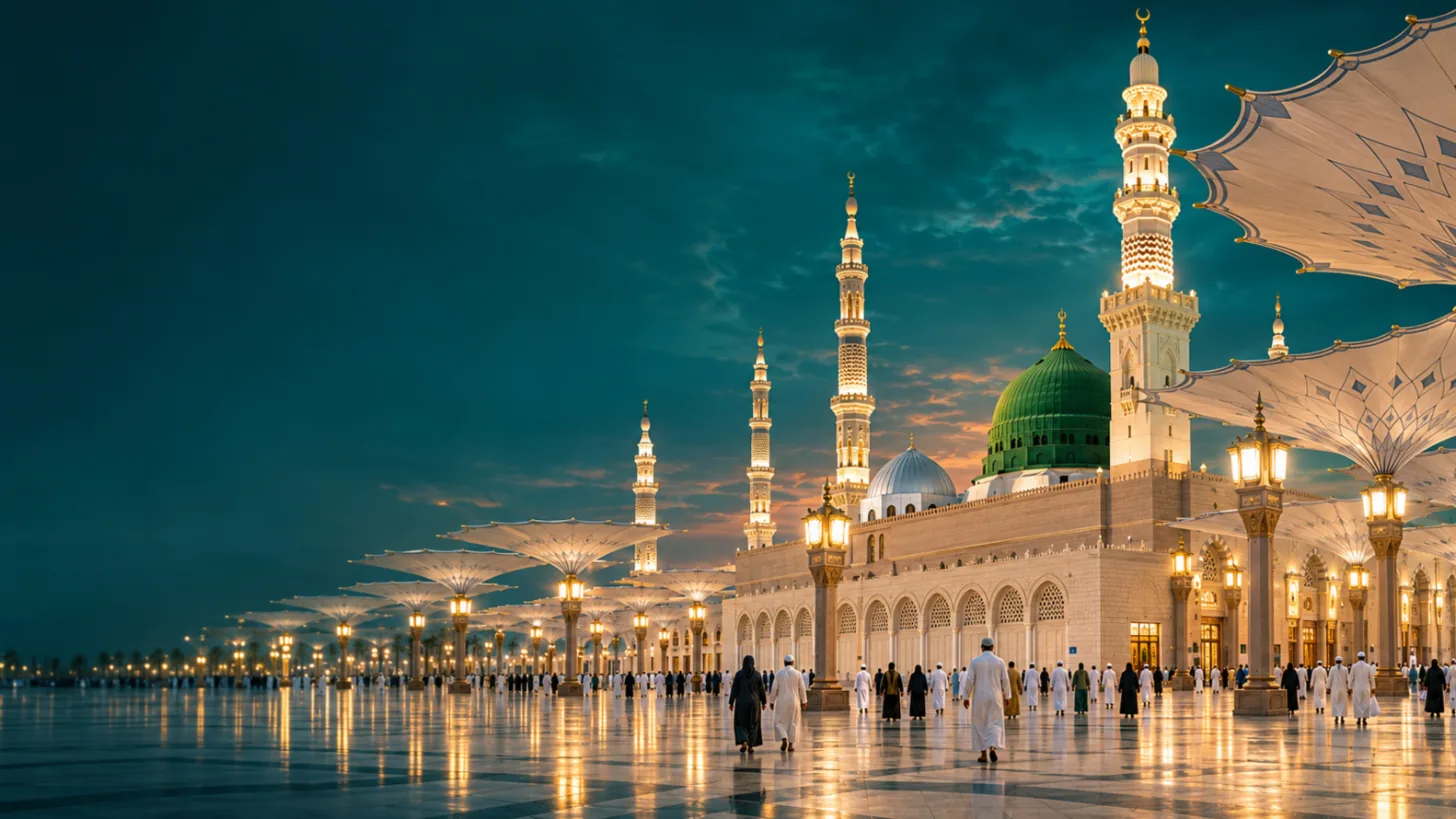
About the Seerah Museum: history and significance
The Seerah Museum is a recent project, developed under the supervision of the Muslim World League, with the aim of presenting the biography of the Prophet ﷺ in a clear, engaging and sourced way to visitors of every language. A related exhibition has also been shown in other cities, but the Madinah museum is the one most pilgrims see.
Unlike Masjid Quba or Jannat al-Baqi, the museum has no link to an event in the Seerah itself. Its significance is educational: it gathers in one place the places, people and events that pilgrims hear about but often cannot picture.
Why it helps your ziyarat
Many visitors arrive in Madinah knowing the names Quba, Uhud and the Trench, but not how they relate to one another. The exhibits explain the layout of the old city, the route of the Hijrah and the main battles, so that when you later stand at Mount Uhud or the Seven Mosques, you already understand what happened there.
A note on depictions
In keeping with the mainstream scholarly position, the museum does not show images of the Prophet ﷺ. His appearance and character are presented through the words of his Companions, as recorded in the books of shama’il such as at-Tirmidhi’s collection, alongside calligraphy, maps and reconstructions of objects and places.
Seerah Museum: what is from the Sunnah (and what is not)
A visit to the Seerah Museum is a permissible educational activity. There is no reward in the Sunnah attached to visiting it, and it should never take the place of praying in Masjid an-Nabawi, where a prayer is better than a thousand prayers elsewhere except Masjid al-Haram (al-Bukhari and Muslim, from Abu Hurayrah).
The only Madinah visits with an established Sunnah are Masjid an-Nabawi itself, Masjid Quba, and greeting the dead at al-Baqi and the martyrs of Uhud. Everything else, including this museum, is a customary or educational visit. Plan it around the prayers, not the other way round.
As with any museum, the accuracy of each panel depends on its sources. Where a story is from the books of Seerah rather than the Sahih collections, scholars differ on its strength, and it is worth checking a reliable Seerah book if a detail is new to you.
What to see and what to read at the Seerah Museum
Exhibits change over time, but visitors typically find sections on:
- the lineage of the Prophet ﷺ and the world of Arabia before Islam;
- his names, description and noble character, drawn from the Qur’an and hadith;
- the Hijrah from Makkah to Madinah and the building of the first mosques;
- the main events of the Madinan period, including Badr, Uhud and the Trench;
- his household, his Companions and his guidance on worship, family life and trade;
- models of Masjid an-Nabawi and the growth of Madinah over the centuries.
Audio guides and screens are offered in several languages, and staff can usually direct you to your language. Allow about an hour; those who like to read every panel can easily spend longer.
There is no dua specific to the museum. A good way to make the visit meaningful is to send salawat on the Prophet ﷺ as you learn about him, and to choose one Sunnah from the exhibits that you will act on during your trip. Before you go, read a short Seerah such as Ar-Raheeq al-Makhtum (The Sealed Nectar) so the displays feel familiar.
If you are visiting with family, give each person one question to answer during the visit, such as where the Prophet ﷺ first stopped on the Hijrah or how many Companions were buried at Uhud. Discussing the answers over a meal afterwards helps children, and adults, remember far more than a quick walk past the screens. Note down anything you want to check later in a trusted book or with a scholar.
How to get to the Seerah Museum from Masjid an-Nabawi
Walking: the museum is beside Masjid an-Nabawi, a few minutes’ walk across the courtyards. Gate numbers and signage change during expansion work, so check the map pin below or ask a mosque guide for the nearest gate.
Taxi or ride-hailing: unnecessary from the central area, as cars cannot reach the mosque’s pedestrian courtyards. From a hotel further out, a short taxi ride to the central area followed by a walk is easiest. Bus: city buses and the hop-on, hop-off sightseeing bus serve the central area; check routes locally.
From Masjid al-Haram in Makkah, travel to Madinah first, about 2.5 hours on the Haramain train or 4 to 5 hours by road. Visit the museum once you are settled in Madinah, ideally early in your stay.
Practical tips for visiting
Check hours first
Opening times, ticketing and prayer-time closures change. Confirm locally or on the museum’s official channels before you go.
Go early in your stay
Seeing the museum first makes every later ziyarat more meaningful.
Between prayers
After Fajr or between Dhuhr and Asr is usually calmer than the evening.
Great for children
Interactive screens and models hold young visitors’ attention.
Use the audio guide
Listening in your own language helps you follow the full story.
Mind the exit time
Leave in good time for the next prayer, as the courtyards fill quickly.
Seerah Museum quick facts
| City | Madinah |
|---|---|
| Distance | Beside Masjid an-Nabawi, a few minutes on foot |
| Time needed | About 60 minutes |
| Best time | Between prayers |
| Difficulty | Easy, indoor and air-conditioned |
| Type of site | Modern museum; opening hours and ticketing change |
| Sunnah visit? | No; an educational visit |
Seerah Museum
Beside Masjid an-Nabawi
Open in Google MapsNearby ziyarat- The Rawdah (Riyad al-Jannah)0.2 km
- Masjid an-Nabawi0.2 km
- Saqifah Bani Sa‘idah0.3 km
- Jannat al-Baqi‘0.4 km
Our Madinah city guide and Madinah ziyarat guide explain the sites the Seerah Museum describes. Pair your visit with the Dar al Madinah Museum, Masjid Quba and Mount Uhud, and plan the order with the ziyarat route planner. Browse every site on the ziyarat hub. If you need to book the Rawdah while in Madinah, use the official Nusuk platform. For the rites themselves, see how to perform Umrah, or ask us for a quote.
Seerah Museum: frequently asked questions
Where is the Seerah Museum in Madinah?
It is beside Masjid an-Nabawi, within a few minutes’ walk of the mosque’s courtyards. Ask a mosque guide for the nearest gate, as signage changes with construction.
Does the museum show pictures of the Prophet ﷺ?
No. His description is given through the words of the Companions, with calligraphy, maps and models of places and objects.
Do I need a ticket or booking?
Ticketing and opening hours change. Check locally or on the museum’s official channels shortly before your visit.
How long should I spend there?
Around an hour is enough for most visitors. Keen readers may want 90 minutes.
Is it suitable for children and elderly visitors?
Yes. It is indoors, air-conditioned and largely step-free, and the interactive displays suit children well.
Is visiting the Seerah Museum part of ziyarat?
It is an educational visit, not a Sunnah ziyarat. It is permissible and beneficial, but it carries no special reward.
Madinah, beautifully explained
We plan Madinah stays near Masjid an-Nabawi, with time for the Seerah Museum and guided ziyarat.