Knowing what to wear for Umrah removes one of the biggest worries for first-time pilgrims. The rules are simpler than many people expect: men wear two plain cloths of ihram, women wear their normal modest clothing, and children follow the same basic pattern. The details, though, make a real difference to comfort and to getting the rulings right.
This guide covers what to wear for Umrah for men, women and children, the footwear and fabrics that work best, what changes with the seasons and what to pack for the days after your Umrah in Makkah and Madinah.
What to wear for Umrah: the basics
Clothing for Umrah is shaped by the state of ihram, which you enter at the Miqat with the intention of Umrah. From that moment until you cut your hair at the end, certain clothing rules apply. Once your Umrah is complete, you return to normal modest dress.
It helps to see where the clothing rules sit within the whole journey. The infographic below shows the steps of Umrah, from entering ihram to cutting the hair, when the restrictions end.
What to wear for Umrah as a man
For men, the question of what to wear for Umrah has a clear answer: the two garments of ihram. One cloth, the izar, is wrapped around the waist and covers the body from the navel to below the knees. The second, the rida, is draped over the shoulders and upper body.
The rules for men’s ihram
- No stitched, fitted clothing. Shirts, trousers, underwear, vests and socks shaped to the body are not worn. The cloths themselves may have hemmed edges.
- No head covering. Caps, turbans and hoods are not allowed while in ihram. An umbrella or the shade of a building is permitted.
- White is recommended. Plain white cloth is the established practice, though the ruling concerns the type of garment rather than the colour.
- No perfume on the cloth. You may perfume your body before making the intention, but not the ihram garments.
A belt or money belt, a watch, glasses and a ring are permitted by most scholars. Many pilgrims use an ihram belt to hold the izar securely and carry a phone and documents. Scholars differ on safety pins, and many advise against pinning the cloths as if sewing a garment, so a belt is the simpler choice.
For a full walkthrough of tying the cloths, uncovering the right shoulder during tawaf and avoiding common slips, read our guide to how to wear ihram.
Prepare before the Miqat
Take a bath, trim nails and remove unwanted hair. You may apply perfume to the body, but not to the ihram cloths.
Wrap the izar
Wrap the lower cloth firmly around the waist, right side first and left on top, and secure it with a belt.
Drape the rida
Place the upper cloth over both shoulders. During the tawaf of Umrah only, pass it under the right arm to uncover the right shoulder.
Put on suitable footwear
Choose sandals that leave the ankle and the top of the foot exposed, as scholars describe.
Make the intention
At or before the Miqat, intend Umrah and begin the Talbiyah. The rules of ihram now apply.
لَبَّيْكَ اللَّهُمَّ لَبَّيْكَ، لَبَّيْكَ لَا شَرِيكَ لَكَ لَبَّيْكَ، إِنَّ الْحَمْدَ وَالنِّعْمَةَ لَكَ وَالْمُلْكَ، لَا شَرِيكَ لَكَ
Labbayk Allahumma labbayk, labbayka la sharika laka labbayk, inna-l-hamda wa-n-ni‘mata laka wa-l-mulk, la sharika lak.
Here I am, O Allah, here I am. Here I am, You have no partner, here I am. All praise, blessings and sovereignty belong to You. You have no partner.
Source: al-Bukhari and MuslimWhat to wear for Umrah as a woman
Women often worry most about what to wear for Umrah, yet the rule is reassuringly simple. There is no special ihram garment for women. A woman wears her normal clothing, provided it is modest, loose and covers the body as required.
The rules for women in ihram
- Any colour is acceptable. White is common but not required. Many women choose plain, muted colours that are cool and do not attract attention.
- No niqab or gloves. In a hadith reported by al-Bukhari, the woman in ihram is told not to wear the niqab or gloves. Many scholars permit lowering a cloth over the face in front of non-mahram men.
- Socks and closed shoes are allowed. Unlike men, women may cover their feet.
- No perfume. Use unscented soap, shampoo and deodorant once in ihram.
Practical choices make a big difference. A long, loose abaya or dress in breathable fabric, a well-fitting hijab or under-scarf cap that will not slip during tawaf, and comfortable layers underneath work well for most women. Pockets, or a small cross-body bag, keep your phone and permit to hand.
Our dedicated guide to ihram for women covers face coverings, jewellery and menstruation in more depth, and the broader Umrah for women guide explains the rulings scholars discuss.
What to wear for Umrah with children
Children may perform Umrah, and it is valid for them, though it does not replace the Umrah many scholars regard as obligatory once they reach maturity. For very young children, a parent makes the intention on their behalf.
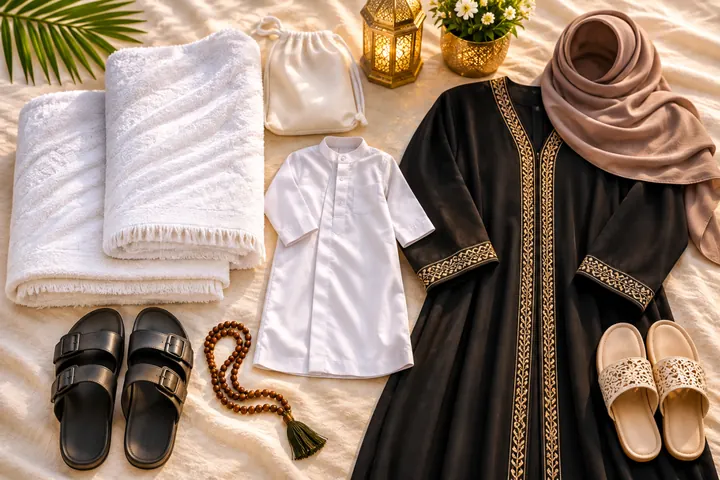
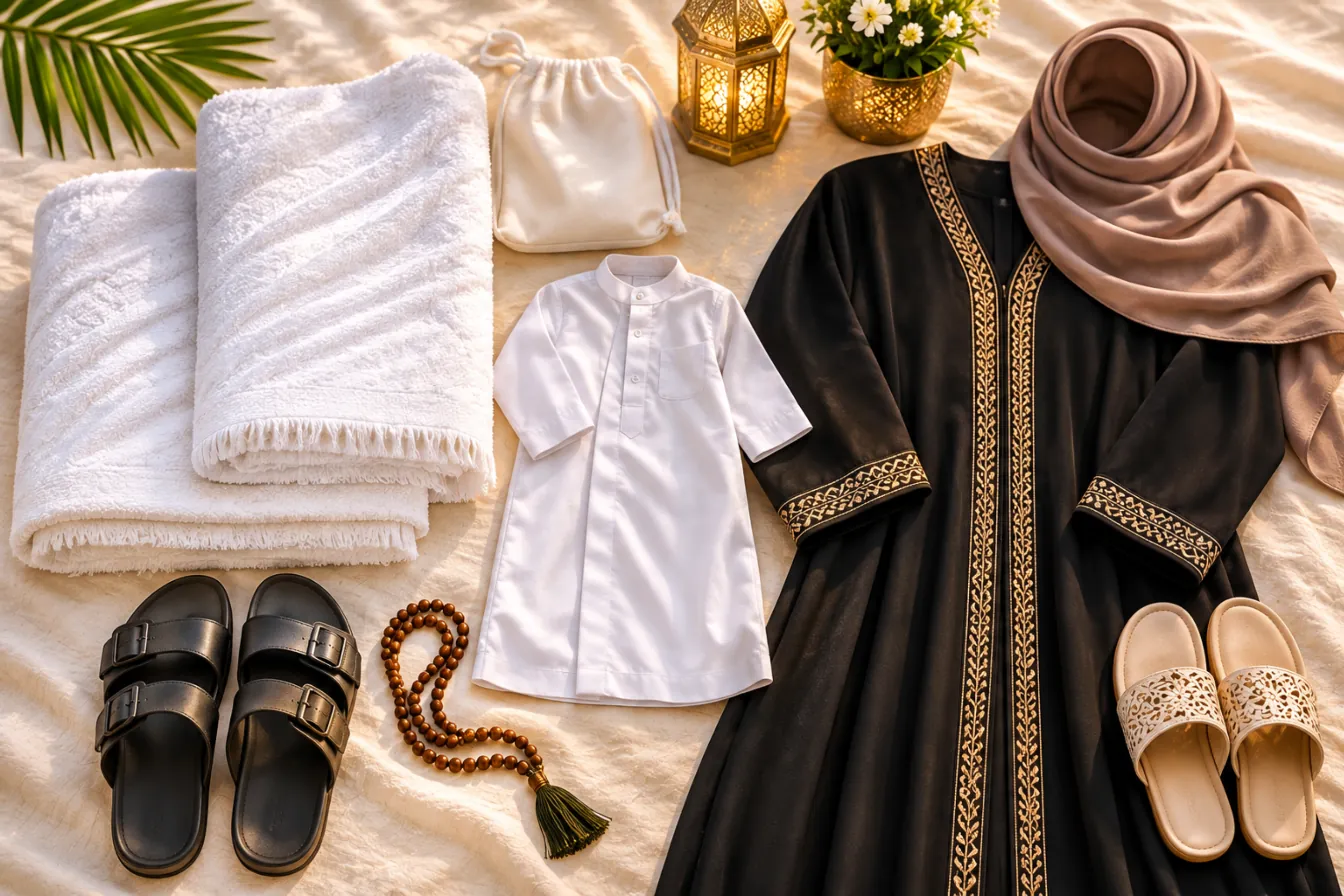
For boys, what to wear for Umrah mirrors the adult rules: a small set of ihram cloths, sized for children. For toddlers, many parents find a soft towelling set easier, as it stays in place. Girls wear normal modest clothes. Nappies are, of course, fine for little ones.
- Pack at least one spare set of ihram or clothing in your day bag.
- Use unscented wipes and creams once the child is in ihram.
- Put a card with your name, hotel and phone number in a pocket or on a wristband.
- Choose bright, recognisable colours for girls’ outfits so they are easy to spot in crowds.
What to wear for Umrah: men, women and children compared
This table brings the main points together so the whole family can check what to wear for Umrah at a glance.
| Item | Men | Women | Children |
|---|---|---|---|
| Main clothing | Two unstitched ihram cloths | Normal modest, loose clothing | Boys: small ihram set; girls: modest clothes |
| Colour | White recommended | Any modest colour | As for adults; bright colours help visibility |
| Head | Uncovered | Hijab worn as usual | Boys uncovered; girls as appropriate for age |
| Face and hands | Uncovered | No niqab or gloves in ihram | Not applicable for young children |
| Feet | Sandals leaving ankle and top of foot exposed | Socks and shoes allowed | Boys like men; girls like women |
| Underwear | Not worn under ihram | Worn as normal | Nappies or underwear as needed |
| Perfume | Body only, before intention | Avoid once in ihram | Use unscented products |
For a full list of what is and is not permitted, including actions beyond clothing, see our ihram rules guide.
Footwear and accessories
Deciding what to wear for Umrah is not only about clothes. Your feet will carry you many kilometres, and a few small items make every day easier.
Footwear
Men need sandals that leave the ankle and top of the foot exposed. Women can wear socks with comfortable shoes. Break them in at home for several weeks.
Ihram belt
Holds the izar in place and keeps your phone, cards and permit safe. Choose one with a zip pocket and avoid scented materials.
Shoe bag
A small drawstring bag means you can carry shoes with you instead of leaving them at the door and searching for them later.
Other useful accessories include a small prayer mat, a refillable water bottle, unscented sun cream and lip balm, and a light shawl or blanket for air-conditioned spaces. A face mask is helpful in crowded areas during cold and flu season.
Dressing for the season
The weather in Makkah and Madinah changes what to wear for Umrah, from fabrics to layers. Our Makkah and Madinah weather guide gives typical conditions month by month.
Days in Makkah are usually pleasant, while nights in Madinah can feel cool. Women can add a light cardigan under the abaya. Men in ihram cannot wear a jacket, but may wrap a larger rida or an extra unstitched cloth around the shoulders for warmth.
Heat can be intense. Choose thin, breathable cotton or light microfibre in pale colours, perform tawaf in the cooler hours and drink water regularly. Learn the signs of heat exhaustion, described by the NHS guidance on heat exhaustion.
Long nights of prayer and crowded masjids mean comfort is key. Pack more changes of clothing, as you may visit the Haram several times a day, and keep a light layer for the air-conditioned interiors.
What to wear after Umrah and in Madinah
Once your Umrah is complete and you have cut your hair, the restrictions of ihram end, and the question of what to wear for Umrah becomes simply one of modest everyday dress. You return to normal modest clothing for the rest of your stay.
Men often wear a thobe, kurta or loose trousers and long tops. Women continue to wear an abaya or modest dress with hijab. Pack clean, presentable clothes for Jumu‘ah, and something comfortable for walking to ziyarat sites in Madinah. If you plan a second Umrah during your trip, keep one ihram set clean and ready.
Dress modestly in public across Saudi Arabia, not only in the Holy Mosques. Loose clothing that covers the shoulders and knees is the minimum expected of visitors, and pilgrims usually dress more conservatively than that.
Common clothing mistakes to avoid
Most problems with what to wear for Umrah come from rushing or copying others without checking. These are the slips we hear about most often.
- Changing on the plane too late. If you fly straight to Jeddah, be dressed in ihram before the aircraft crosses the Miqat. Many men change at the airport before boarding.
- Using scented products. Perfumed soap, wipes and creams are easy to forget. Pack an unscented set before you leave home.
- Wearing the wrong sandals. Men sometimes wear trainers or sandals with thick straps over the top of the foot. Check yours against the description above.
- Uncovering the shoulder all the time. Men uncover the right shoulder only during the tawaf of Umrah, then cover it again for the prayer.
- Thin or see-through fabric. Both men and women should check that clothing stays modest when wet or in bright sunlight.
- Packing too little. Deciding what to wear for Umrah is easier with one spare set of everything in your day bag.
If you are unsure what to wear for Umrah in a particular situation, such as a medical condition that needs a support garment, ask a scholar before you travel. Many such cases have clear answers, and some carry an expiation, so it is better to know in advance.
What to wear for Umrah: packing checklist
Use the interactive checklist below to pack what to wear for Umrah in one sitting. Your progress is saved on your device, so you can come back to it as you shop. You can also open the full Umrah checklist on its own page, or browse all our free Umrah tools.
Umrah packing checklist
Tick items as you pack. Progress is saved on this device.
Documents
Ihram and clothing
Health
Worship
Practical
Visa and vaccination rules change; confirm current requirements for your nationality before you travel.
- Men: two or three ihram sets, ihram belt, suitable sandals, several thobes or kurtas, light layers for Madinah evenings.
- Women: two or three abayas or long dresses, several hijabs and under-scarf caps, socks and walking shoes, a light cardigan.
- Children: child-size ihram for boys, modest outfits for girls, spare sets in the day bag, ID wristbands.
- Everyone: unscented toiletries, shoe bag, small prayer mat, refillable bottle, power bank and a printed copy of your documents.
Getting what to wear for Umrah right
Getting what to wear for Umrah right is about simplicity, modesty and comfort. Choose plain garments, test your footwear at home, avoid perfume once in ihram and pack a little more than you think you will need. Then put the clothing question aside and focus on your worship. If you would like a team to handle the rest of the planning, you can request a tailored quote for your trip.
Tailored quoteTell us your dates, city and hotel preferencesOne short form, a personalised Umrah or Hajj proposal from our travel team — no obligation.Request my quote →What to wear for Umrah: frequently asked questions
Do women have to wear white for Umrah?
No. Women may wear any modest colour. White is common but not required, and many women choose plain, muted colours.
Can men wear underwear under ihram?
No. Men do not wear stitched, fitted garments such as underwear under the ihram cloths. A belt is used to keep the izar secure.
Can I wear socks during Umrah?
Women may wear socks and closed shoes. Men in ihram should wear sandals that leave the ankle and the top of the foot exposed.
Can women wear the niqab in ihram?
A woman in ihram does not wear the niqab or gloves, as reported by al-Bukhari. Many scholars permit lowering a cloth over the face in front of non-mahram men.
Can I use deodorant during Umrah?
Avoid scented products once in ihram. Unscented deodorant is widely regarded as acceptable; scented products may be used on the body before making the intention.
What should toddlers wear for Umrah?
Boys can wear a small, soft ihram set and girls modest everyday clothes. Pack spares and use unscented wipes and creams.
What should I wear in Madinah?
After Umrah, wear normal modest clothing such as a thobe or kurta for men and an abaya or long dress for women, with a light layer for cool evenings.
Leave the planning to us
Tell us your dates and who is travelling, and our team will send a tailored Umrah itinerary with hotels, transfers and a full pre-departure checklist.